
 Application Cases

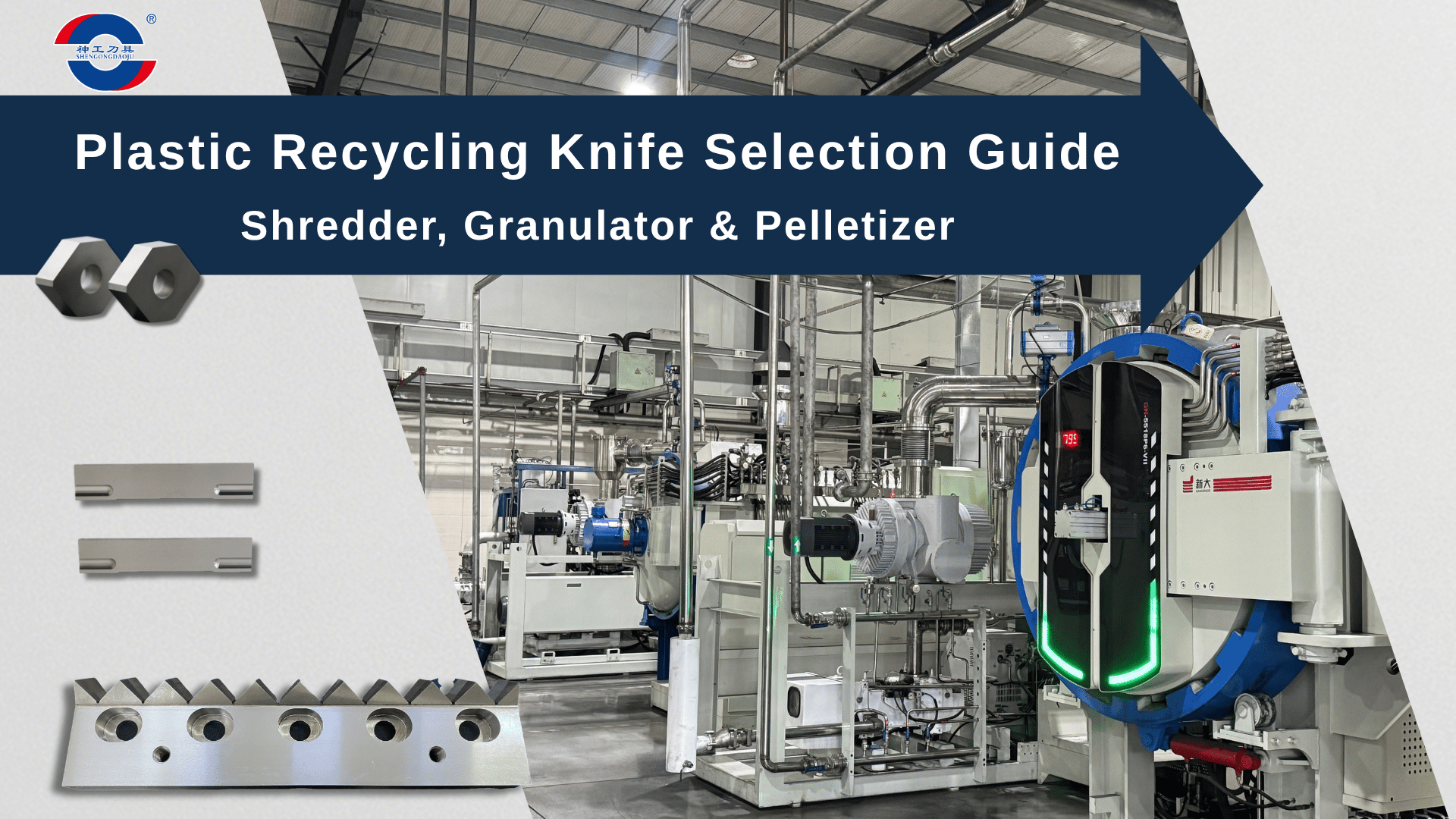


Plastic Recycling Knife Selection Guide: Shredder, Granulator & Pelletizer
Plastic recycling runs through three core cutting stages: shredding, granulation, and pelletizing. Wrong blade choices lead to frequent chipping, fast wear, uneven particle size, and higher operating costs.
Unlike virgin plastic production with steady feedstock, recycling operations handle highly variable input—from clean film scrap to contaminated mixed waste. You should not select blades only by machine model. Feedstock type, impurity level, target output size, and production volume all decide your ideal blade setup.
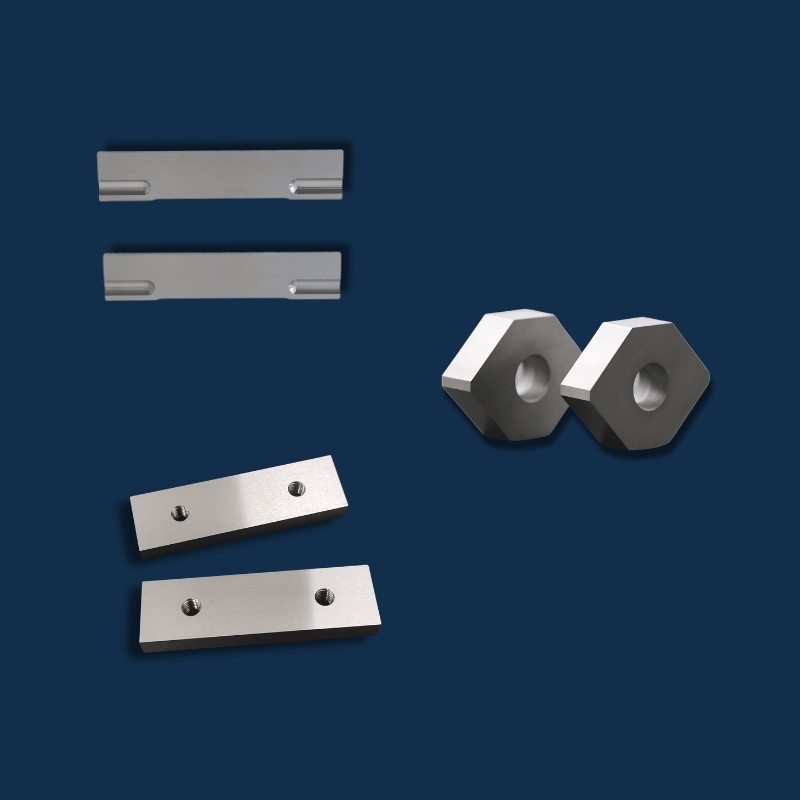


Shredder Blades: Primary Size Reduction
Clean all contact surfaces of the knife holder and shaft thoroughly. Shredder blades handle the first breakdown stage, processing bulky material like thick HDPE blocks, PET bottle bales, mixed industrial plastic lumps and post-consumer waste. These blades need high impact toughness to absorb shock from hard contaminants such as metal scraps, stones and glass fragments that often enter the feed stream.
Two standard blade profiles are used in plastic recycling:
Tooth-Style Blades
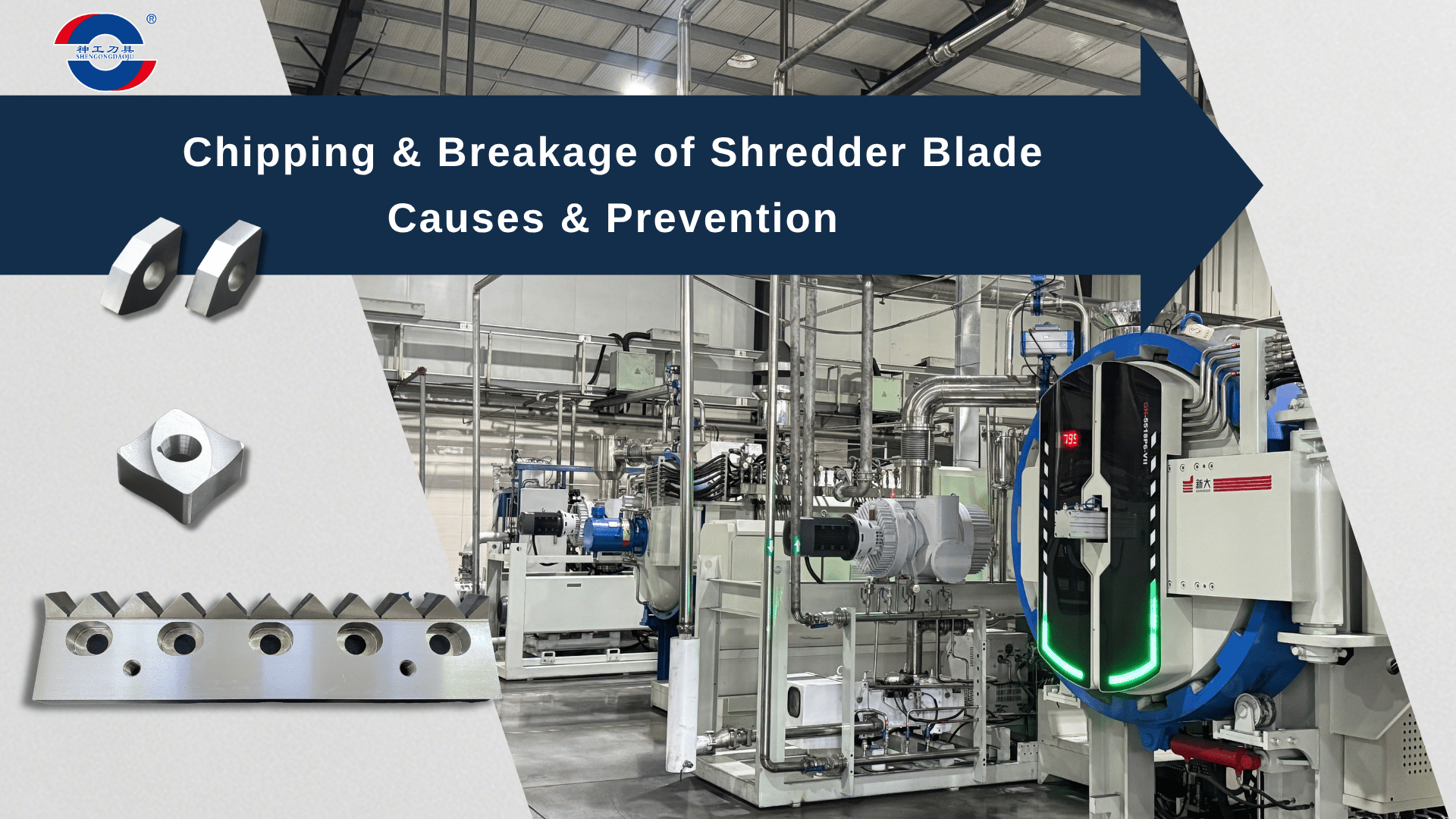
Reinforced tooth structure for thick rigid plastic and heavy blades. They spread impact load evenly and resist chipping under heavy shock.
Flat-Profile Blades
Better for thin films, soft sheet and lightweight packaging waste. The deliver cleaner cuts with less dust and fines.
Selection Rule
Pick tooth-style blades for high-impact, high-contaminant bulk waste; use flat-profile blades for clean, thin, lightweight feedstock. A common on-site mistake is using overly hard, brittle carbide grades on mixed waste with lots of contaminants. This raises chipping risk instead of improving wear life.
Granulation Blades: Secondary Size Refinement
Granulater blades cut shredded scrap into uniform flakes, usually 3-12 mm, controlled by screen mesh size. This stage needs a balance of wear resistance and edge sharpness. Blades that are too soft dull rapidly; overly brittle blades chip from light impact.
Screen mesh fineness directly sets blade requirements:
Coarse Mesh (8-12 mm)
Standard edge geometry works for general flake production
Fine Mesh (3-6 mm )
Requires sharper, more precise edge geometry and more wear-resistant substrate to keep clean cuts and avoid frictional overheating
Selection Rule
Match edge precision to your screen mesh size. Finer mesh demands higher edge precision and better wear resistance. Abrasive fillers in feedstock are the top cause of fast granulator blade wear.
Pelletizer Blades: Final Pellet Cutting
Pelletizer blades run against the extrusion die face to cut molten polymer strands into uniform finished pellets. This is the most precision-critical stage in plastic recycling.
Key performance requirements:
Ultra-Flat Blade Body
Standard edge geometry works for general flake productionTight flatness tolerance ensures even contact across the full die face.
Low Surface Roughness
A smooth cutting edge reduces polymer adhesion and prevents pellet tails, smearing and "mushrooming" defects.
Consistent Edge Sharpness
Keeps pellet length and shape uniform through full production runs.
Selection Rule
Prioritize flatness and surface finish for pelletizer blades. Poor precision directly causes pellet quality defects.
Carbide Grade Selection
Blade material is the biggest driver of service life and total cost. D2 tool steel is a common entry-level option for clean, low-abrasion feedstock. Tungsten carbide delivers much longer life and lower cost pr ton for most recycling operations.
For a full breakdown of material performance and maching, see our recycling blade material comparison guide.
Quick Selection Steps
·Audit your feedstock identify main material type, typical contaminants and abrasiveness.
·Match blade profile to each production stage based on target particle size.
·Select the right carbide grade based on wear demand and impurity levels.
Correct blade matching delivers stable throughput , lower regrind frequency and less unplanned downtime.
Shen Gong manufactures high-precision tungsten carbide shredder, granulator and pelletizer knives for plastic recycling. We offer custom edge geometry, carbide grades and surface treatments for specific feedstock conditions. With over 28 years of industrial knife manufacturing experience, we support recyclers worldwide with reliable blade solutions and on-site technical guidance.
Contact our engineering team for a blade recommendation tailored to your line.